01 · The problem
Reliability work needs one accountable observer.
Vigil watches the systems we ship after release, records incidents and exposes whether a failure is new, repeated or connected to a release.
The problem
The solution
An internal observer for failures, silent outages and release impact across live websites and APIs.
For teams running live websites and APIs: catch new failures, expiring certificates and silent outages before customers do.
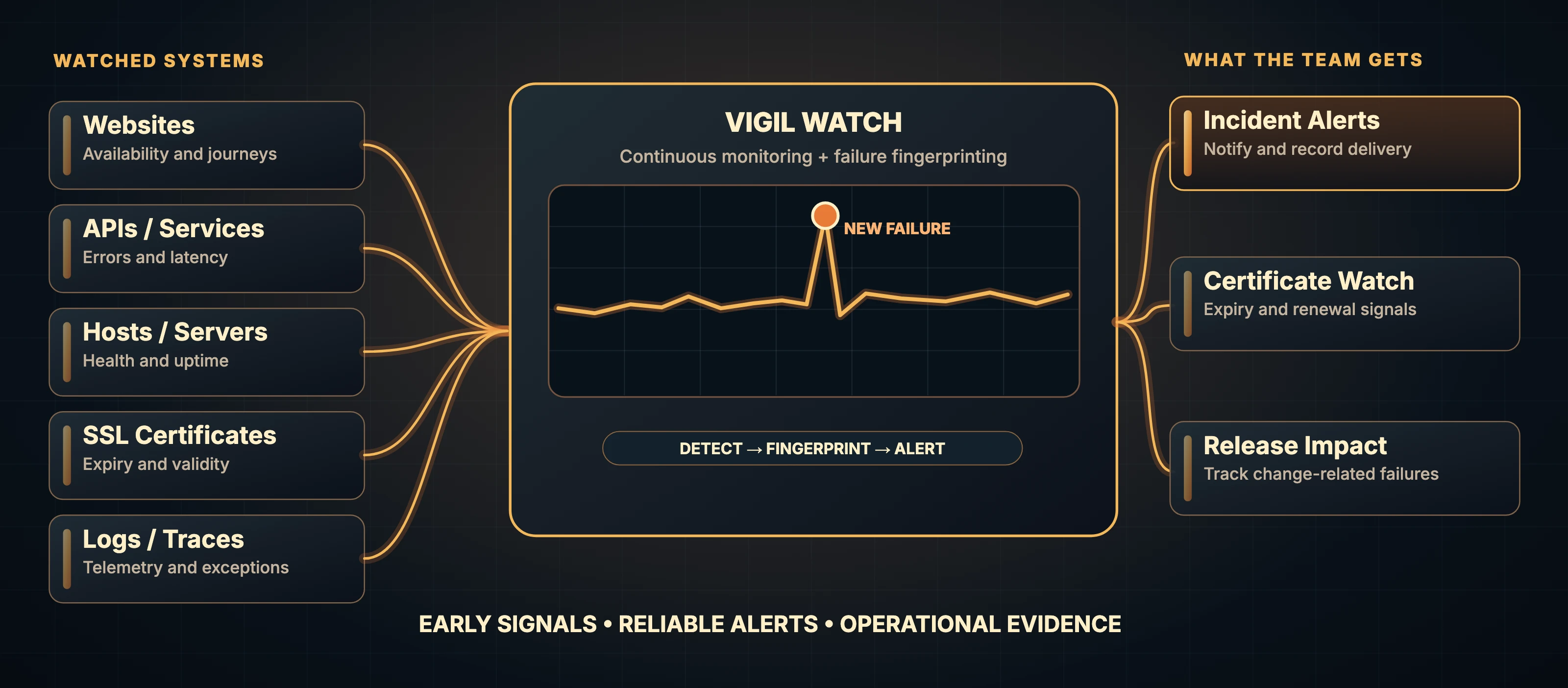
Control plane
Repair proposals, when enabled, run in an isolated worker and require tests, preview verification and human approval before any explicit deployment.
Interface walkthrough
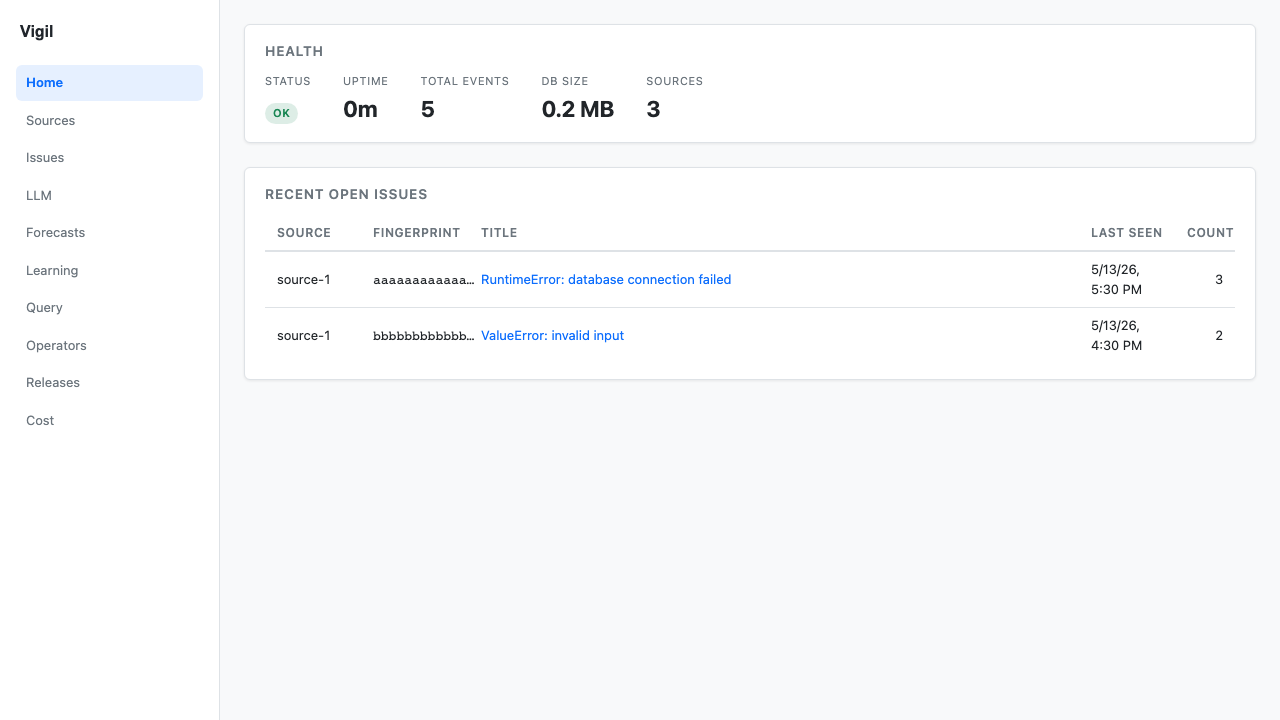
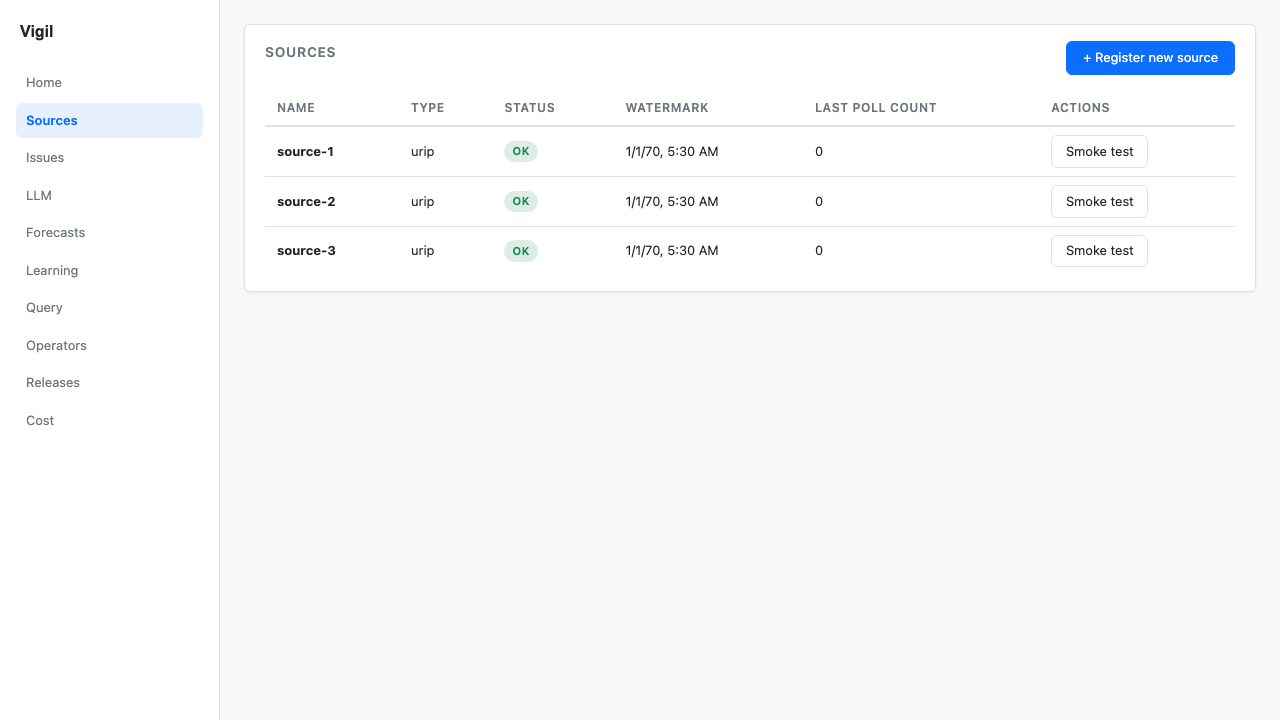
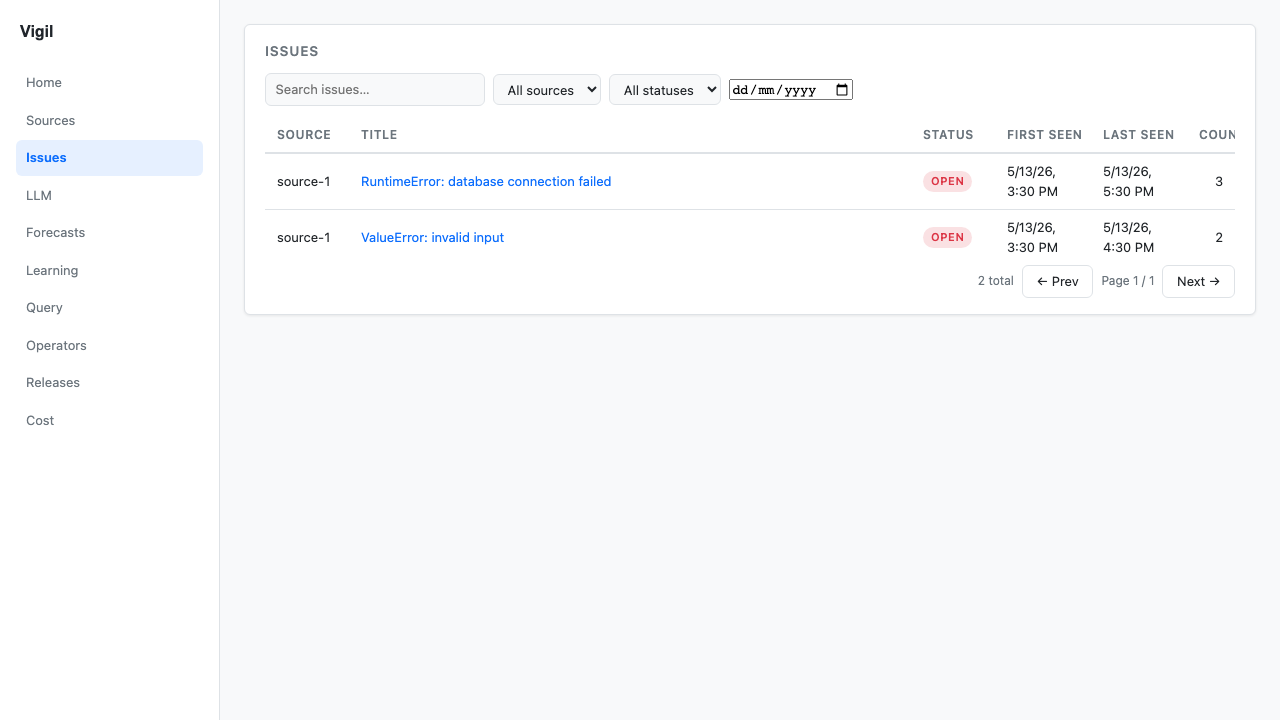
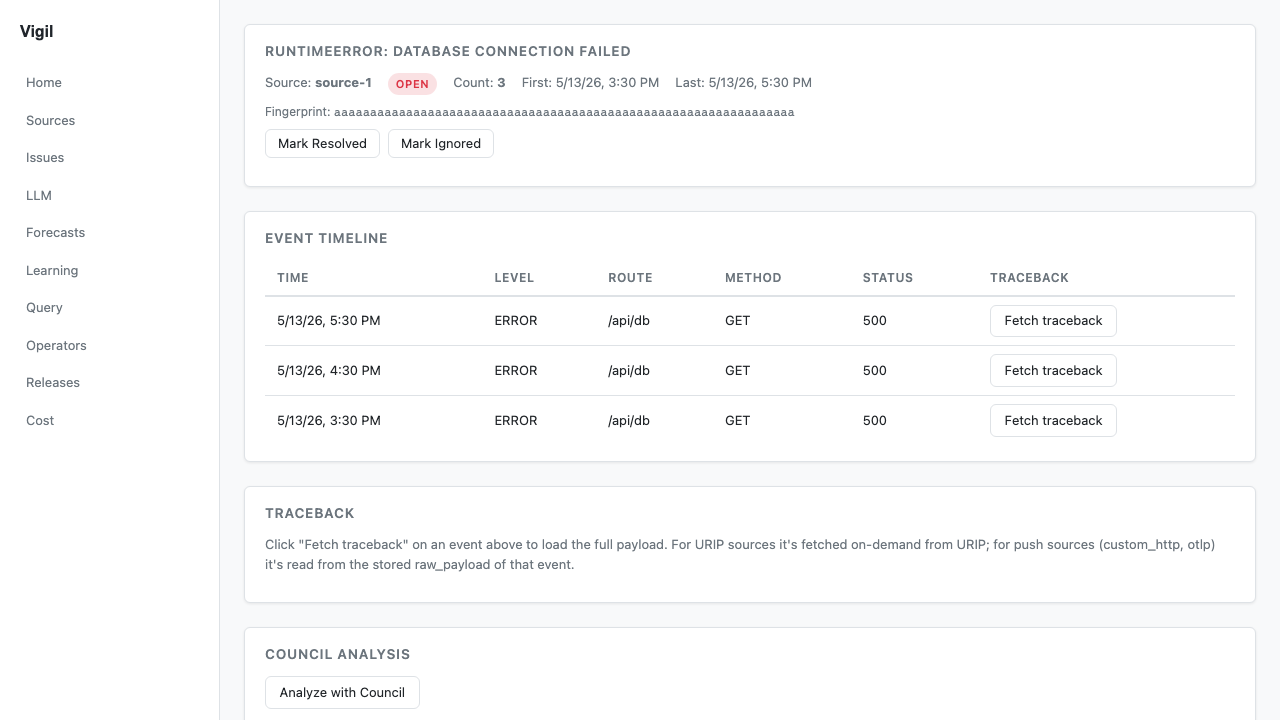
Captures use seeded E2E data to demonstrate the interface and controls. They are not presented as a live customer dashboard or a current production status feed.
Product features
Errors are scattered across many tools.
Seven source connectors including signed webhooks, uptime, OTLP, Sentry, osquery and URIP paths.
One place watches every app.
Repeated errors bury the real news.
Fingerprinting and alert rules detect new failures, spikes and repeats.
Teams are alerted once per meaningful problem.
Alerts may not actually be delivered.
Telegram, email, webhook and Slack delivery is recorded as successful or failed.
There is proof of notification delivery.
Forged events can poison monitoring.
HMAC-SHA256 signed ingest with constant-time checks and a required secret.
The endpoint refuses unauthenticated event data.
Certificates and hosts fail without warning.
Certificate, domain-expiry, disk, memory and load checks.
Countdown failures can be caught before an outage.
A monitor can fail silently.
Heartbeat, dead-man switch and self-monitoring.
The watcher’s own failure becomes visible.
A release can make things worse.
Release registration, error-rate tracking and rollback records.
Operators can inspect release impact and unusual volume.
Recurring errors take manual diagnosis.
Gated AI diagnosis and fix proposals, disabled by default and dry-run by default.
Repeat failures can receive a guarded repair proposal.
01 · The problem
Vigil watches the systems we ship after release, records incidents and exposes whether a failure is new, repeated or connected to a release.
02 · Control plane
Repair proposals are gated, isolated and require human approval before an explicit deployment.
03 · Honest status
Vigil is an internal platform. Public incident volume, false-positive rate, repair success rate and rollback rate are not published.
Have a problem shaped like this one?
Tell us the workflow and the outcome you need. A clear yes, a clear no, or a sharper question — within 48 hours.